
Biological mass spectrometry
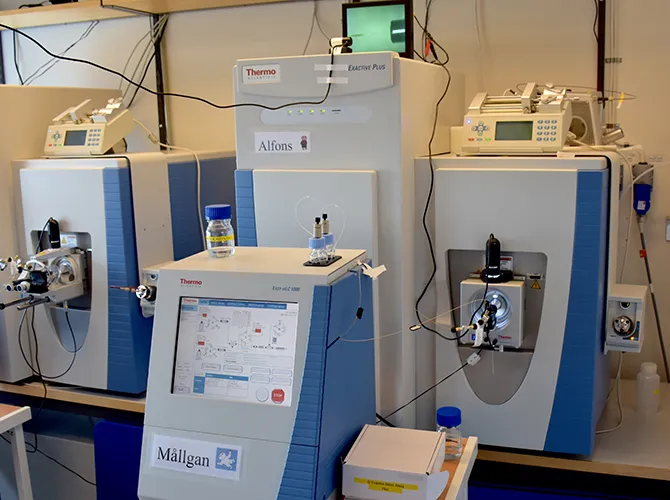
Biological mass spectrometry is an important tool in modern biomedical research, providing detailed insights into the molecular composition of cells, tissues, and biofluids.
Through sensitive and large-scale analysis of proteins and small molecules, mass spectrometry (MS) contributes to understanding biological processes and disease mechanisms beyond what can be inferred from genomic data alone. Our research focuses on MS-based proteomics and small-molecule mass spectrometry imaging (MALDI-MSI). These approaches enable both in-depth molecular profiling and spatially resolved analysis of tissues, and are applied to investigate complex biological systems in clinical and preclinical settings. We develop and apply quantitative and multimodal workflows to study disease-related molecular changes, with the aim of improving mechanistic understanding, identifying biomarkers, and supporting the development of precision medicine strategies. Our research is carried out in close collaboration with clinical and international partners, and in connection with the national infrastructure for biological mass spectrometry (BioMS).
Research Topics
The research spans several interconnected areas, including:
We investigate the molecular mechanisms underlying neurodegenerative disorders such as Alzheimer’s and Parkinson’s disease using multiomics approaches. Our work combines MS-based proteomics with advanced cellular models, including patient-derived induced pluripotent stem cells (iPSCs), to study disease-specific pathways and cellular phenotypes. The research is conducted in close collaboration with Assoc. Prof. Laurent Roybon (Van Andel Institute), focusing on patient-relevant models and translational insights.
Our research aims to characterize molecular heterogeneity in lung cancer, with a focus on lung adenocarcinoma (LUAD) and small cell lung cancer (SCLC). Using quantitative proteomics and integrative analysis, we study tumor subtypes, progression, and therapy resistance mechanisms.
The work is conducted within international collaborative frameworks.
This project focuses on the molecular mechanisms underlying cancer-induced cachexia, a systemic condition affecting a large proportion of cancer patients. In particular, we investigate the role of extracellular vesicles (EVs) as mediators of intercellular communication and their contribution to disease progression. Using MS-based proteomics, we analyze EV-associated molecular profiles in experimental models and clinical samples to identify pathways involved in tissue and organ dysfunction, including effects on cardiac muscle. The aim is to identify biomarkers for early detection and to improve the understanding of systemic cancer effects. This work is conducted in collaboration with Semmelweis University.

Melinda Rezeli
frida [dot] sandberg [at] bme [dot] lth [dot] se (melinda[dot]rezeli[at]bme[dot]lth[dot]se)
Profile in Lund University's Research Portal